
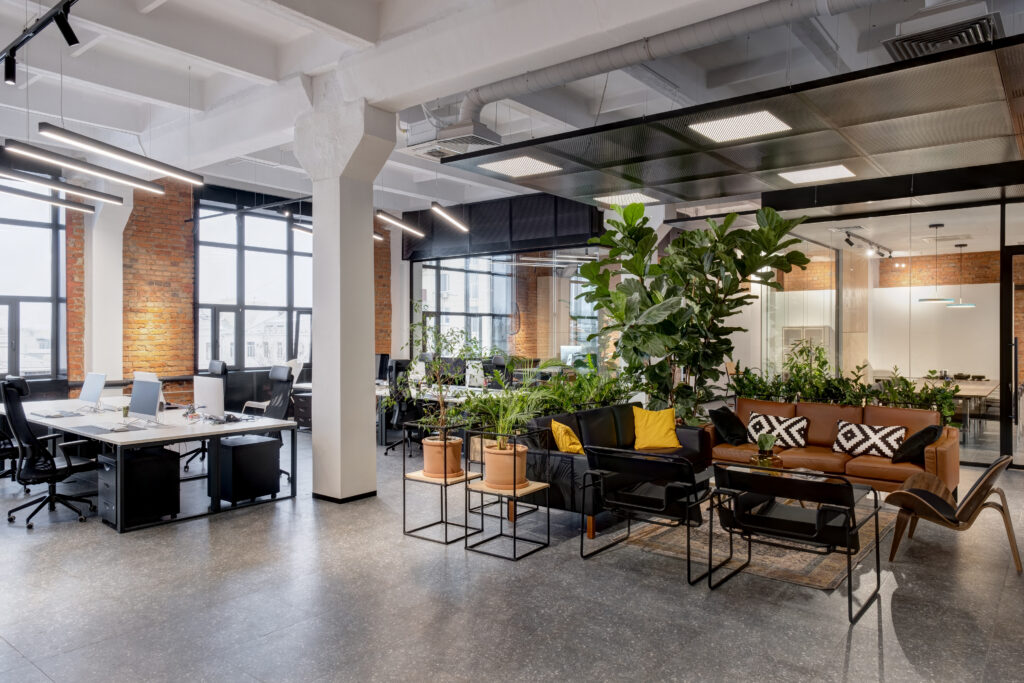
Walk into any office along West End or in the Gulch, and you can tell within seconds how much attention a business pays to detail. Before visitors notice the artwork or coffee bar, they notice the flooring underfoot. For Nashville business owners, flooring is more than a design line item. It is a hardworking surface that must withstand far more than the obvious. There’s foot traffic, sure, but humidity swings, rolling furniture and equipment, spills, and years of wear all call for a product that is attractive, durable, and easy to maintain.
At Ozburn-Hessey, we’ve spent decades installing flooring in offices throughout Middle Tennessee. We have seen the consequences of choosing the wrong product, and we understand the many factors businesses must weigh when selecting flooring that aligns with their operations, goals, and budget. Informed by what our team encounters and solves in the field every day, this flooring guide covers what matters most when choosing flooring for your office.
What Does Nashville’s Climate Mean for Office Flooring?
Nashville sits in a humid subtropical climate zone, making moisture an important consideration when choosing flooring. Wood is a hygroscopic material, meaning it absorbs and releases moisture in response to its surroundings. Summer humidity can cause floorboards to swell, while winter heating may dry them out. That cycle of expansion and contraction can contribute to cupping, gapping, and squeaking when products, site conditions, or installation methods are not properly evaluated.
Before recommending flooring Nashville businesses can count on season after season, we assess site and subfloor conditions, test moisture levels where appropriate, and follow manufacturer requirements for material conditioning and acclimation. Offices in older downtown buildings or converted warehouses in areas such as Wedgewood-Houston may require especially careful evaluation because their original subfloors were not necessarily designed with modern flooring systems and HVAC cycling in mind. Addressing these conditions before installation can help prevent premature movement, damage, repairs, and replacement.
Hardwood, Engineered Hardwood, and Laminate: How Do You Choose?
An important part of any hardwood flooring guide is explaining the advantages and limitations of solid wood and common alternatives. For businesses searching for hardwood flooring in Nashville, TN, contractors can install solid hardwood in commercial offices; it offers natural character and a long service life because it can often be refinished multiple times. However, it generally carries the highest upfront cost and is more responsive to changes in indoor moisture conditions. It may be best suited to reception areas, executive offices, conference rooms, and other spaces where appearance is a priority and environmental conditions can be carefully managed.
Engineered hardwood is constructed with a top layer of genuine wood fused to a layered core. This design provides the authentic appearance of solid wood while offering greater dimensional stability when temperature and humidity fluctuate. It delivers the prestigious, upscale look many corporate headquarters and creative offices desire while remaining versatile enough for open floor plans and other high-visibility areas.
It is also important to distinguish laminate from genuine wood. Laminate is a budget-conscious synthetic flooring made with a printed design layer and a protective wear layer. Commercially rated products can provide strong resistance to scratches and everyday wear, giving offices the visual warmth of wood without being as easily marked by rolling chairs or dollies. This can make laminate a practical choice for reception areas, hallways, and other busy spaces. Moisture resistance varies by product, however, so its intended use and warranty requirements should be carefully reviewed.
We are currently seeing a shift toward matte, low-sheen finishes and lighter, more neutral wood tones. These styles feel calmer and more contemporary than the dark, high-gloss flooring that dominated many office designs in the past. Ultimately, the hardwood-versus-laminate decision comes down to budget, foot traffic, moisture exposure, maintenance expectations, and the aesthetic that best represents the business.
How Should Flooring Be Matched to the Way an Office Is Used?
Not every space is suited to wood or wood-look flooring. The right material depends on function, not just appearance, and different parts of the same office may require different solutions.
Luxury vinyl tile (LVT) and plank are widely used in commercial interiors because they resist everyday spills, withstand heavy use, and offer convincing wood and stone visuals. They can work particularly well in corridors, break rooms, reception areas, and mixed-use spaces. Vinyl composition tile is another durable commercial option, particularly for facilities that prioritize economy and are prepared to follow its required maintenance program.
Carpet tile remains a strong option for private offices, conference rooms, waiting areas, and open workspaces where acoustics and comfort matter. Today’s modular systems allow a worn or stained section to be replaced without redoing the entire room, offering a practical cost advantage over broadloom carpet. In multistory offices, carpet tile and resilient flooring with acoustic backing may also help reduce the sound of footsteps, rolling chairs, and equipment, although results depend on the complete flooring and building assembly.
Healthcare offices require further consideration. Carpet tile may provide comfort and sound absorption in waiting and administrative areas, while exam rooms generally benefit from resilient flooring that is durable and compatible with the facility’s cleaning protocols. Commercial sheet vinyl, particularly when installed with welded seams and a coved base, creates a surface with fewer joints where moisture and debris can collect. Healthcare-grade LVT may also be appropriate in some outpatient settings, depending on the procedures performed and the facility’s infection-prevention requirements.
Dog-friendly offices, which are becoming increasingly popular (and in demand), and pet-oriented businesses have their own unique flooring needs. Veterinary clinics, grooming facilities, and workplaces that welcome employees’ dogs benefit most from surfaces that resist scratches, moisture, stains, and lingering odors while remaining easy to clean. Commercial resilient flooring, such as appropriately rated LVT, LVP, or sheet vinyl, is often a practical choice. Slip resistance and sound absorption should also be considered to help create a safer, more comfortable environment for animals, employees, and visitors.
What Are the Biggest Office Flooring Mistakes?
One of the biggest mistakes Nashville business owners make is choosing office flooring based primarily on appearance or initial cost. A material may look impressive in a showroom or lookbook but perform poorly under daily foot traffic, rolling office chairs, spills, and routine cleaning. Business owners should consider durability, moisture resistance, slip resistance, maintenance requirements, accessibility, and expected lifespan before making their selection.
Another common mistake is treating every part of the office the same. Reception areas, conference rooms, private offices, kitchens, corridors, restrooms, and clinical spaces each place different demands on flooring. Installing one product throughout may simplify the design, but it can also lead to premature wear or unnecessary maintenance.
Safety and accessibility must also be considered. The 2010 ADA Standards for Accessible Design require floor surfaces along accessible routes and in accessible spaces to be stable, firm, and slip-resistant. Transitions, changes in level, carpet pile, loose mats, and the condition of the installed floor can all affect accessibility. Compliance depends on the complete installation and surrounding conditions, not simply on selecting a product described as accessible.
What Does Office Flooring Really Cost?
The total cost of ownership extends beyond a material’s price per square foot. It includes subfloor preparation, installation, cleaning, repairs, business disruption, and eventual replacement. A professional site assessment from Ozburn-Hessey can identify underlying conditions and help match each area with flooring that supports the office’s appearance, safety, maintenance capabilities, and long-term performance.
Businesses should also consider whether their maintenance teams can follow the manufacturer’s cleaning requirements. Using incompatible chemicals, equipment, or maintenance methods may affect the floor’s appearance, performance, and warranty. Indoor air quality may be another priority, particularly in occupied offices. Low-emitting flooring, adhesives, and installation products can support better indoor environments, while careful scheduling helps ensure adequate ventilation and curing time.
How a flooring project is structured can also affect its overall cost. When flooring is purchased through a general contractor, additional subcontractor costs and markups may be included. Working directly with Ozburn-Hessey can eliminate those added layers, helping you save approximately 20% in some cases while maintaining clear visibility into project costs.
How Do You Choose the Right Office Flooring in Nashville?
Start by considering how each area is used, the amount and type of traffic it receives, the maintenance it will require, and the conditions that could affect its performance. Then compare those practical requirements with your design goals and total project budget.
As a local company with decades of industry experience, Ozburn-Hessey understands how Nashville’s climate and operating conditions can affect flooring performance over time. We have also developed long-standing relationships with leading manufacturers, allowing us to deliver dependable quality and top value on every project.
Whether you’re renovating an existing office, outfitting a new space, or completing a commercial buildout, Ozburn-Hessey can help you choose flooring that looks right, performs beautifully, and supports your business for years to come.
Ready to find the right flooring for your Nashville office? Contact Ozburn-Hessey for your custom quote.