
Nashville’s commercial sector is booming, and with every new build and renovation comes the need to select flooring that’s as safe and durable as it is attractive. So, before you choose a flooring style and finish that appeals to you, ask yourself one question: Is it the safest choice for your space?
At Ozburn-Hessey, we’ve spent years helping Middle Tennessee business owners select the perfect flooring for their interiors—products that are just the right reflection of their brand without playing double duty as a liability waiting to happen.
Here’s what every commercial property owner should consider before settling on a new flooring system.
Important Flooring Considerations: Safety First!
No business owner wants a customer to sustain an injury on their property. Beyond the pain and suffering a fall can cause, a customer injury poses legal and financial risks. The 2010 ADA Standards for Accessible Design require floor and ground surfaces along accessible routes to be stable, firm, and slip-resistant. However, the standards do not specify a minimum coefficient of friction, as no single slip-resistance test has been universally adopted.
In practice, that means Nashville businesses need a flooring partner who understands which products and finishes hold up to real-world foot traffic, not just a spec sheet. This is where commercial safety flooring types are important. At Ozburn-Hessey, we guide every flooring choice with safety as a priority, reducing the risk of falls without sacrificing the look your brand needs.
Which Floor Is Best For Commercial Use?
There’s no particular flooring system that holds the title for Best Commercial Use, which is why local expertise matters.
Retail shops and galleries often perform well with engineered hardwood, luxury vinyl tile (LVT), or polished concrete, depending on the desired appearance and expected foot traffic. Walk-off mats should always be placed at entrances to help reduce moisture and debris tracked indoors, lowering the risk of slips and falls while protecting the flooring.
Offices and coworking spaces frequently opt for commercial-grade carpet, provided it’s inspected regularly for snags or loose seams that can pose tripping hazards.
Healthcare and surgical facilities require resilient flooring types, such as vinyl, linoleum, or rubber, because they are sound-absorbent, easy to sanitize, and slip-resistant. All these considerations are extremely important in fast-paced clinical environments where staff are on their feet constantly, and patients and visitors unfamiliar with these spaces must also be kept safe.
For commercial flooring Nashville businesses can count on, the right answer depends on how the space is used, not just how a product looks.
Compliance Standards Every Nashville Business Owner Should Know About
Beyond general slip resistance, a few specific compliance details are easy for business owners to miss (and costly to get wrong).
The 2010 ADA Standards for Accessible Design establish clear requirements for changes in floor level. Vertical changes of up to ¼ inch are permitted without modification. Changes between ¼ inch and ½ inch must be beveled with a slope no steeper than 1:2 to reduce tripping hazards and improve accessibility. Any change in level exceeding ½ inch must be treated as a ramp and meet the applicable ADA requirements.
These standards help ensure that people using wheelchairs, walkers, mobility devices, or other assistive equipment can move safely throughout a facility. They also reduce trip hazards for employees, customers, patients, and visitors.
If your commercial floors have settled over time, developed cracks, have uneven transitions between flooring materials, or have raised sections caused by moisture or wear, it’s worth having them professionally evaluated. Correcting these issues not only improves safety but also helps create a more accessible environment and can reduce potential liability.
If carpet is part of your plan, it must be securely attached with a pile height no greater than half an inch to stay within ADA standards.
On the testing side for hard-surface flooring, the industry increasingly relies on Dynamic Coefficient of Friction (DCOF) testing under ANSI A326.3 to evaluate slip resistance using a standardized, repeatable method. Once again, our technicians can help you select commercial flooring systems that support accessibility, safety, and applicable industry standards.
Commercial flooring safety also extends beyond slips and falls. Under the International Building Code adopted by Metro Nashville, floor coverings used in exit passageways, corridors, stair enclosures, and other means of egress may be required to meet minimum critical radiant flux classifications, as determined through ASTM E648 or NFPA 253 testing. These fire-performance requirements help ensure flooring will resist flame propagation long enough to support safe evacuation during an emergency.
Building codes are updated periodically, and local amendments may apply. Working with an experienced commercial flooring contractor helps ensure the products you select are appropriate for your occupancy type and intended application.
Keeping Your Floors Safe After Installation
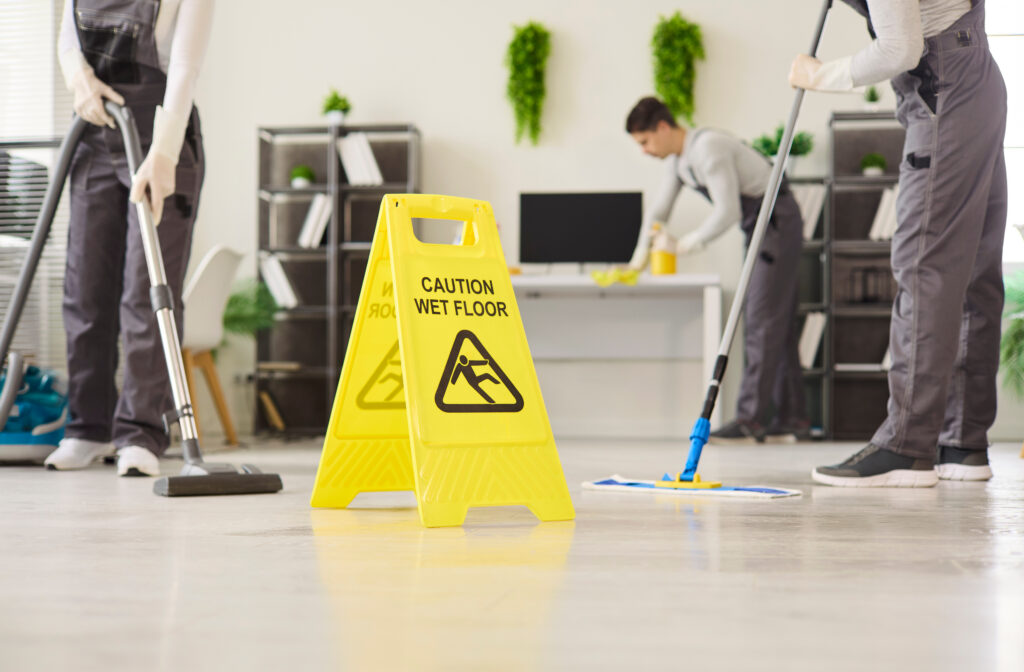
Once your floors are installed, upkeep is important. This means cleaning high-traffic areas after hours or before opening so that surfaces have time to dry before customers arrive. Always post visible wet-floor signage during business hours whenever cleaning occurs. We also recommend that you maintain a maintenance log noting cleaning schedules, product changes, and repairs, as documentation can demonstrate that reasonable maintenance practices were followed. Train your staff to spot early signs of wear and tear that can lead to trips or falls. These include loose carpet edges, worn finishes, or standing water. A well-maintained floor protects both your customers and your hard-earned reputation.
Nashville business owners don’t have to research the right flooring options alone. At Ozburn-Hessey, we have decades of experience installing commercial flooring across Middle Tennessee, from retail storefronts to healthcare settings, and we bring that same local knowledge to every project, big or small. Whether you’re planning a new build or simply want a second opinion on your current floors, our team is here to help you choose flooring that supports safety, accessibility, and applicable building code requirements.
Reach out to us today for a safe and beautiful floor. Request your custom quote today.