
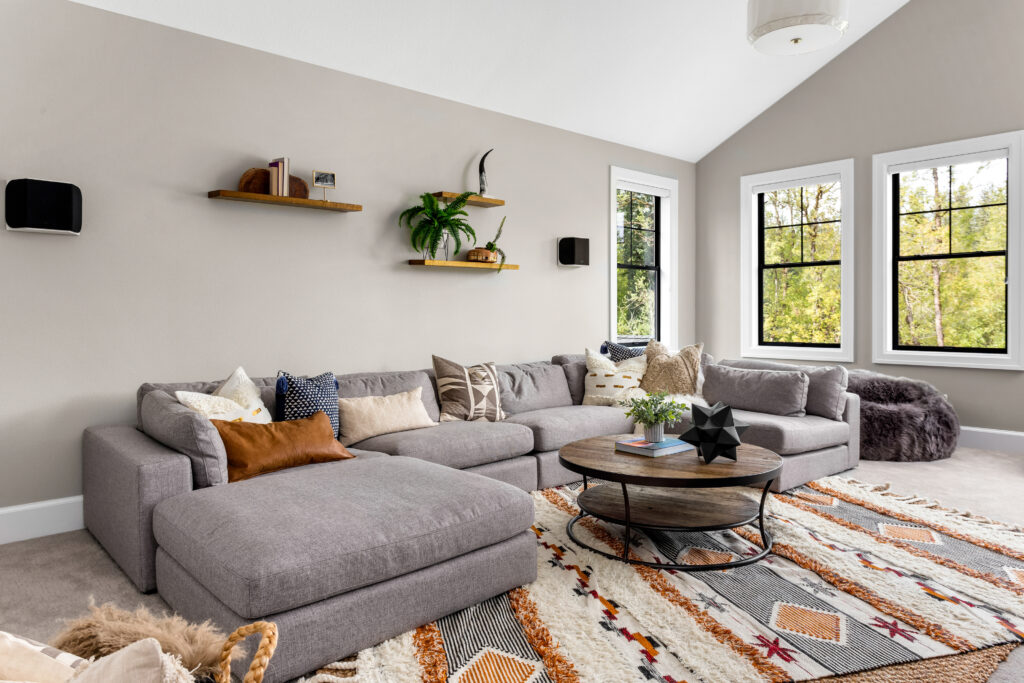
Looking for ways to accentuate your hardwood, vinyl, or laminate flooring with area rugs? Read on to get some tips for how to best use rugs, and discover why sometimes it’s best to replace your resilient or hardwood flooring before trying to style a room.
The Importance of Area Rugs
Area rugs have been around since 500 BC, making them a very tried and true component of interior design. We’ve all seen bad rugs, but figuring out why they fit into some spaces and don’t work in others can be difficult if you don’t have an eye for decor. If you just want your living spaces to work better stylistically, but struggle with finding what works and what doesn’t, you aren’t alone. Area rugs are a great piece of decor that can serve as more than just a soft floor covering. If you use them right, you can protect furniture, your flooring, and give pets and children a comfortable spot amongst harder floors. So whether you’re wondering if you can put a rug over vinyl plank flooring or simply trying to decorate a large living room full of hardwoods, area rugs are a great option for you. It’s just a matter of how you use them.
Rugs and Flooring
Now that we have some knowledge on where area rugs can work in a home and how to decorate with them, let’s talk about how they work with some of the most popular types of flooring in modern design.
Area rugs for hardwood floors should be placed with care and consideration for the flow of a room, and the way the rug pattern or color suits the natural look of hardwood flooring. Whether your hardwoods are new, newly restored, or they’ve been around for some time, they certainly can benefit from some protection. Area rugs can help keep heavy furniture from scratching or denting hardwood flooring and laminates. Most interior designers recommend putting large furniture over top of area rugs, as it can help draw focus to the main part of a room. It’s also helpful to put heavy furniture on a rug to keep it from moving too much. Hardwoods, laminates, and vinyl floors are durable, but they aren’t invulnerable. If you’ve got a bed or couch that can slide on your hardwood or laminate, scratches can happen.
Area rugs help make interior decor look cohesive, and they also preserve the quality of your flooring. It’s important to clean your area rugs regularly and also the flooring beneath them. Dirt and dust can accumulate under a rug, which can slowly become abrasive to the floor beneath it. Regular vacuuming and using floor cleaners that are safe for your particular type of flooring are necessary for keeping your floors looking their best, whether they’re under a rug or not.
If you’re looking for style tips, that’s another story. Area rugs for vinyl flooring should typically add a pop of color or a unique design, as most modern vinyl flooring is designed to be neutral. You want to balance the number of things that are happening in a room when it comes to design elements. If your walls are covered in colorful art or decoration, your flooring can stand to be more neutral. Likewise, if your walls are bare, then your area rugs on laminate flooring should pop.
If you’re not well-versed in interior design, you aren’t alone. There are tons of resources online for matching colors and patterns to give any part of your home a natural look that feels good. Even if you don’t care much for aesthetics, a good-looking space makes a home feel cozier and more put-together. The right combinations of rugs and flooring can make a room seem larger and more open, while poor choices can lead to claustrophobic and uncomfortable spaces. Always trust your gut when it comes to your home, but it never hurts to consult with the pros.
Rugs and Hardwood: What to Avoid
Hardwood floors and area rugs have a long history, and some homeowners use them to cover blemishes in older or unfinished hardwoods. While this works in a practical sense, using area rugs to obscure a floor’s issues can actually be detrimental to your entire home. Hardwood floors that show signs of wear or water damage shouldn’t just be covered. Instead, you need to explore your options for refinishing, repairing, or replacing. Many homeowners tear up old carpeting and discover hardwoods, but those hardwoods often aren’t always in great shape. If you’re a new homeowner in that scenario, don’t go for the easy route. Damaged flooring can get worse, and it could be a sign that there’s an active leak or other issue with the home or subflooring. Covering it up won’t make the issue go away, but it can hide it long enough for the problem to spread and cause problems elsewhere in the home.
Don’t Cover Up—Enhance Your Interiors
Layering area rugs throughout your home over hard or resilient flooring can be a great way to give your home depth and improve the overall comfort of your living spaces. If you’re looking to explore new flooring options in your home, call the professionals at Ozburn-Hessey for a free consultation and estimate.