
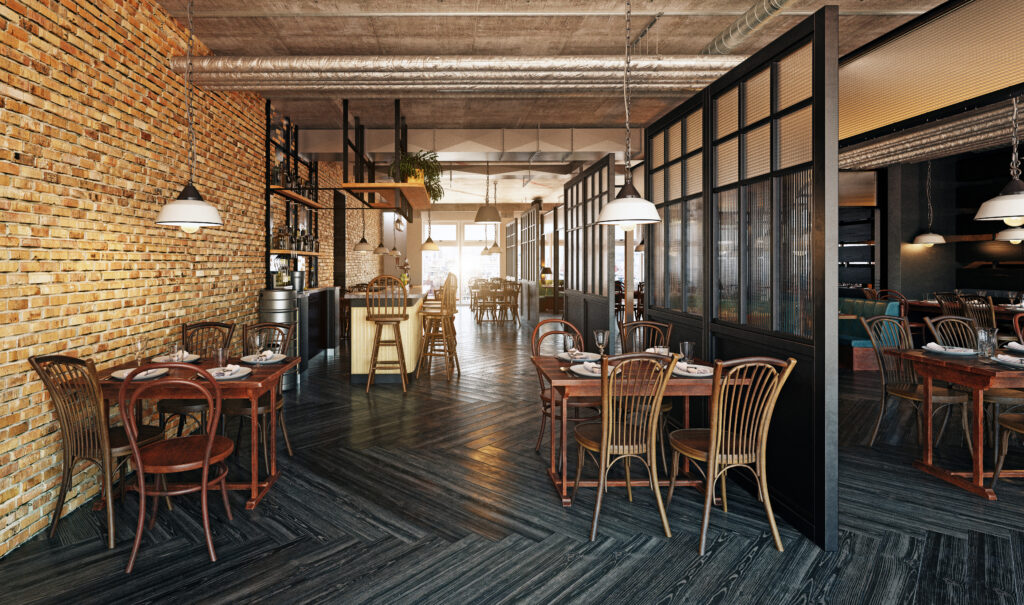
When people think about flooring for a restaurant or hospitality venue, they often picture the finished space: a welcoming dining room, an elegant hotel lobby, or a stylish bar. But choosing the right commercial flooring involves more than just aesthetics alone.
Every area of a property in the restaurant/hospitality sector places different demands on its flooring. Heavy foot traffic, spills, moisture, cleaning chemicals, rolling carts, guest comfort, acoustics, and long-term maintenance all need to be considered when shortlisting potential products. Nashville’s humid climate and seasonal weather also play an important role in how commercial flooring performs over time.
At Ozburn-Hessey, we’ve spent more than 30 years helping businesses throughout Middle Tennessee select and install commercial flooring systems that balance performance, safety, aesthetics, and long-term value. We understand that every restaurant, hotel, brewery, event venue, and hospitality space will have unique operational demands, and we work closely with owners, architects, designers, and contractors to recommend flooring solutions that support both day-to-day operations and the overall guest experience.
Whether you’re building a new venue, renovating, or refreshing a current space, this guide outlines today’s best practices for selecting hospitality flooring. You’ll learn what to consider before making a decision, which flooring systems work best in different areas, and how experienced installation helps protect your investment for years to come.
Start by Evaluating Performance, Not Flooring Materials
Choosing restaurant flooring should begin by understanding how each area of your venue will be used.
A busy commercial kitchen has very different requirements than a dining room, while a hotel lobby experiences different traffic patterns than a banquet hall or restroom. Before recommending a flooring system, commercial flooring specialists evaluate factors such as expected foot traffic, moisture exposure, slip resistance, rolling loads, maintenance requirements, and the overall guest experience.
In many cases, the best solution will include several flooring systems working together to meet the needs of each space.
Matching Flooring to Each Area of Your Restaurant or Hospitality Property in Nashville
Successful flooring in restaurants is not a one-size-fits-all solution. Let’s break down flooring considerations for different parts of your business.
Dining Rooms
Dining areas should balance appearance with durability. Luxury vinyl tile (LVT), porcelain tile, and, in some upscale settings, hardwood flooring in Nashville remain popular choices because they can complement a restaurant’s design while standing up to frequent foot traffic and regular cleaning. Acoustics, chair movement, and long-term maintenance should also influence product selection.
Commercial Kitchens
Commercial kitchens require flooring that prioritizes safety, sanitation, and durability. Materials such as commercial rubber, quarry tile, and resin flooring systems are commonly selected because they can withstand moisture, grease, frequent cleaning, and demanding daily use while providing appropriate slip resistance for the environment.
Bars, Hotel Lobbies, and Public Spaces
Bars, hotel lobbies, and reception areas must withstand constant traffic while creating a strong first impression. Flooring should resist scratches, spills, and rolling luggage or service carts without sacrificing appearance.
Luxury vinyl tile (LVT), porcelain tile, and, in select upscale hospitality settings, hardwood flooring are all excellent options, depending on the desired aesthetic and performance requirements. Many modern commercial flooring products can also replicate the warmth and character of natural wood or stone while offering improved moisture resistance and easier maintenance. The right choice will depend on the level of traffic, cleaning requirements, and the atmosphere the space is designed to create.
Restrooms
Restroom flooring should prioritize moisture resistance, hygiene, slip resistance, and ease of maintenance. Porcelain tile remains a popular choice because of its durability and wide range of design options, while commercial sheet vinyl can provide a seamless surface with fewer joints where moisture and bacteria can accumulate. In some applications, resin flooring systems may also be appropriate for their durability and ease of cleaning.
Regardless of the material selected, proper installation, appropriate slip resistance, and attention to floor transitions are essential to creating a restroom environment that is safe, attractive, and built to withstand years of daily use.
Why Nashville’s Climate Must Be Part of the Decision-Making Process
When selecting flooring in Nashville, local climate conditions are a key consideration.
Nashville’s humid summers, seasonal rainfall, and changing temperatures can affect concrete moisture levels, flooring adhesives, and certain flooring materials if they’re not properly accounted for during installation. Moisture testing, proper subfloor preparation, and selecting products appropriate for the environment are essential steps in helping commercial flooring perform as intended. Entrance matting systems can also reduce the amount of water, dirt, and debris tracked into a facility, helping protect flooring while reducing maintenance.
Working with a commercial flooring contractor who understands local conditions helps ensure these factors are addressed before installation begins.
Best Practices for Restaurant and Hospitality Flooring
Every commercial project is different, but today’s best practices remain the same.
Successful projects begin by matching flooring to the function of each space rather than selecting a single material for the entire building. Safety, durability, ease of maintenance, and lifecycle cost should be evaluated alongside aesthetics. Flooring should also be compatible with the cleaning products and sanitation procedures used throughout the facility.
Proper preparation is equally important. Moisture testing, subfloor evaluation, and manufacturer-approved installation methods help reduce the risk of premature flooring failures. Planning installation around operating schedules can also minimize disruption for restaurants and hospitality businesses that need to remain open or return to service quickly.
Why Professional Installation Makes the Difference
Even the highest-quality flooring products can underperform if they aren’t installed properly. Many commercial flooring issues can be traced back to inadequate subfloor preparation, improper adhesives, or moisture that wasn’t identified before installation.
As one of the most trusted flooring companies in Nashville, we at Ozburn-Hessey work closely with property owners, architects, designers, and contractors to recommend flooring systems that meet both the functional and aesthetic goals of each project. From selecting the right materials to ensuring proper installation, our team focuses on delivering flooring that performs beautifully for years to come.
Whether you’re considering tile, LVT, or hardwood flooring in Nashville, TN, for an upscale hospitality environment, choosing the right flooring system, along with the right installation partner, helps protect your investment while creating spaces that are safe, attractive, and built for the demands of daily commercial use.
Frequently Asked Questions
Rather than one material being best for every restaurant, the right flooring depends on where it will be installed. Dining rooms often benefit from luxury vinyl tile or porcelain tile, while commercial kitchens typically require flooring designed to withstand moisture, grease, heavy cleaning, and constant use.
Longevity depends on selecting the right flooring for each environment and ensuring it is properly installed. Commercial-grade porcelain tile, quarry tile, rubber, and LVT flooring systems can provide years of reliable performance when matched to the space and properly maintained.
Yes, but in guest-facing spaces rather than commercial kitchens or areas exposed to frequent moisture. In many hospitality settings, luxury vinyl products can achieve a similar appearance while offering greater resistance to spills and easier maintenance.
While aesthetics contribute to first impressions, they should never be the only factor guiding your decision. The best commercial flooring balances appearance with the practical demands of each space. Important considerations include expected foot traffic, moisture exposure, slip resistance, durability, ease of cleaning, compatibility with cleaning chemicals, long-term maintenance requirements, and lifecycle costs. It’s also important to account for factors such as acoustics in guest areas, Nashville’s climate and humidity, and the condition of the subfloor before installation. Evaluating these considerations early helps ensure the flooring you choose not only complements your design but also performs reliably for years to come.
Flooring materials must be installed correctly to function as needed over the long-term and to provide the best value. Proper subfloor preparation, moisture testing, manufacturer-approved adhesives, and installation techniques all contribute to the long-term performance of a commercial flooring system. Working with an experienced contractor helps reduce the risk of issues such as adhesive failure, uneven surfaces, moisture-related damage, and unnecessary repairs, protecting your investment and minimizing future disruptions.
Buy local, work with the pros, and choose from a large selection of flooring products when you partner with Ozburn-Hessey. Get in touch for your custom quote.